Labeling Parts of a Wave: A Complete Guide for GCSE Physics
Understanding the structure of a wave is essential for anyone studying physics at GCSE level. By learning how to label the parts of a wave you can quickly identify the key features that describe how energy travels through a medium. This article provides a clear overview of the main components, explains the difference between transverse and longitudinal waves, and offers simple tips for remembering each part.
Why Waves Matter
Waves are the primary means by which energy is transferred from one place to another. Unlike particles, waves do not carry matter; instead, they transmit energy through oscillations of the medium. This fundamental concept underpins many topics in physics, from sound and light to electromagnetic signals and even the ECG (EKG) waveform used in medical diagnostics.
Core Wave Terminology
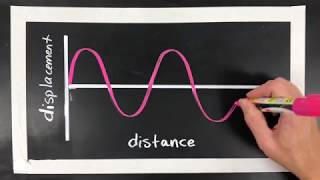
When you look at a typical wave diagram, several distinct elements appear. Below is a quick reference that you can use to label any wave correctly.
- Amplitude (A) – The maximum distance the particles move from their equilibrium position. It indicates the wave’s energy; larger amplitudes mean more energy.
- Wavelength (λ) – The distance between two consecutive points that are in phase, such as crest to crest or trough to trough.
- Frequency (f) – The number of complete cycles that pass a given point per second, measured in hertz (Hz).
- Period (T) – The time taken for one full cycle to travel past a point. It is the reciprocal of frequency (T = 1/f).
- Wave speed (v) – The rate at which the wave travels through the medium. It can be calculated using the relation v = f λ.
- Crest – The highest point of a transverse wave.
- Trough – The lowest point of a transverse wave.
- Compression – A region where particles are close together in a longitudinal wave.
- Rarefaction – A region where particles are spread apart in a longitudinal wave.
Transverse vs. Longitudinal Waves
Two main categories of waves appear in GCSE physics: transverse and longitudinal. Knowing how to label their parts helps you differentiate between them and understand how each type transfers energy.
Transverse Waves
In transverse waves, particle motion is perpendicular to the direction of wave travel. Common examples include light waves and waves on a string. When labeling a transverse wave, focus on the crests and troughs as well as the amplitude and wavelength.
Longitudinal Waves
Longitudinal waves have particle motion parallel to the direction of travel. Sound waves in air are a classic example. For these waves, you will label compressions and rarefactions