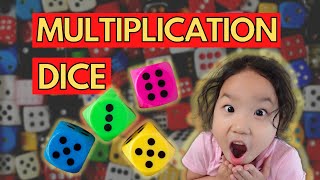
Multiplication Dice Game: Turning Numbers into Playful Challenges
Parents and teachers constantly search for fresh ways to make multiplication feel less like a chore and more like an adventure. The Multiplication Dice Game does exactly that by swapping rote memorisation of tables for a hands‑on activity that blends luck, strategy, and quick thinking. In classrooms, after‑school clubs, or at the kitchen table, a simple pair of dice can become a powerful learning tool that breaks the stereotype of oral table drills.
Why Dice Make Multiplication Fun
Dice are naturally engaging. Their bright colours, satisfying roll, and element of chance capture children’s attention instantly. When a child rolls two dice, the numbers that appear are not just random—they become the operands for a multiplication problem that the child must solve on the spot. This immediate connection between a physical action and a mental calculation reinforces number sense in a way that static worksheets cannot.
- Visual‑kinesthetic link: Rolling the dice provides a tactile cue that helps children remember the resulting product.
- Instant feedback: Kids see whether their answer is correct right away, which builds confidence.
- Social interaction: Playing in pairs or small groups encourages discussion of strategies and peer teaching.
How to Set Up the Basic Multiplication Dice Game
Materials Needed
- Two standard six‑sided dice (or larger dice for higher numbers).
- A whiteboard or a sheet of paper for writing answers.
- A timer (optional) to add a speed element.
- Score sheet to track points.
Step‑by‑Step Instructions
- Roll the dice: The first player shakes and rolls both dice.
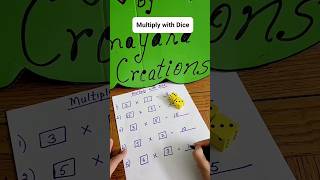
- Form the multiplication problem: Multiply the two numbers that appear. For example, a roll of 4 and 5 becomes 4 × 5.
- Write or say the answer: The player records the product on the whiteboard or announces it aloud.
- Check the answer: If the answer is correct, award one point. If not, give the player a chance to correct it or let the next player try.
- Pass the dice: Continue clockwise until each player has had a set number of turns or until a time limit is reached.
At the end of the game, the player with the highest score wins. Simple, yet effective.
Variations to Keep the Game Fresh
Once children master the basic version, you can introduce variations that increase difficulty, encourage teamwork, or align with specific learning goals.
- Double‑Dice Multiplication: Use two ten‑sided dice (0‑9) to practice products up to 81.
- Target Number Challenge: Set a target product (e.g., 24). Players roll until they achieve the exact product, reinforcing factor recognition.
- Speed Round: