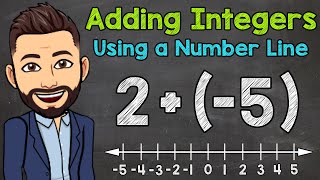
Understanding Number Lines with Positive and Negative Numbers
The number line is one of the most fundamental tools in mathematics for understanding positive and negative numbers. It provides a visual representation that helps students grasp abstract concepts through concrete imagery. By learning how to work with numbers on a number line, students develop crucial skills for adding, subtracting, and comparing integers.
Constructing the Number Line
A number line begins with a horizontal line with equally spaced marks. The center point is typically labeled zero, creating a reference point that divides the line into positive and negative sections. Numbers to the right of zero represent positive values, while numbers to the left represent negative values. Each space between the marks represents one unit, making it easy to count and measure distances between numbers.
The beauty of the number line lies in its simplicity. It shows that negative numbers are simply extensions of the counting numbers in the opposite direction. This visual representation helps clarify that negative numbers aren't "less real" than positive numbers—they simply represent values below zero or in the opposite direction of our typical counting sequence.
Adding Integers Using a Number Line
When adding positive and negative numbers, the number line provides a clear method for finding sums. To add numbers using a number line, start at the first number and move in the direction indicated by the second number.
For example, to calculate 3 + 4, start at 3 on the number line and move 4 units to the right (since we're adding a positive number). You'll land on 7, confirming that 3 + 4 = 7.
When adding a negative number, you move in the opposite direction. To calculate 5 + (-3), start at 5 and move 3 units to the left (since we're adding a negative number). You'll land on 2, showing that 5 + (-3) = 2.
Working with Multiple Additions
The number line method works for multiple additions as well. Consider calculating -2 + 5 + (-3) + 4. Start at -2, move 5 units right to 3, then 3 units left to 0, and finally 4 units right to 4. The answer is 4.
Subtracting Integers on a Number Line
Subtraction can be thought of as moving in the opposite direction of addition. To subtract a positive number, move to the left. To subtract a negative number, move to the right.
For example, to calculate 6 - 2, start at 6 and move 2 units to the left, landing on 4. For 3 - (-2), start at 3 and move 2 units to the right (subtracting a negative is the same as adding), landing on 5.
Subtracting Negative Numbers
One of the most confusing concepts for students is subtracting negative numbers. The rule is: subtracting a negative number equals adding a positive number. On the number line, this means moving in the positive direction. For instance, 7 - (-3) becomes 7 + 3, which equals 10.
Comparing Positive and Negative Numbers
The number line makes it easy to compare numbers. Any number to the right is greater than any number to its left. This means that -5 is less than -2, and -3 is less than 4.
This visual comparison helps students understand why a number with a larger absolute value can actually be smaller when negative. For example, -8 has a larger absolute value than -3, but -8 < -3 because it lies further to the left on the number line.
Practical Applications
Number lines have numerous real-world applications. They help explain concepts like temperature changes, bank account balances, elevator movements, and sports scoring. When temperatures drop below zero, the number line shows how far below zero we've fallen. In banking, deposits move right on the number line while withdrawals move left.