What Does Capo Mean?
A capo (short for capotasto, Italian for “cap” or “head”) is a small device that clamps across all the strings of a guitar at a chosen fret. By doing so, it effectively changes the guitar’s open string pitches, allowing you to play in a higher key while using the same chord shapes. This simple tool can transform the way you play, making songs sound brighter and opening up new tonal possibilities.
How a Capo Works
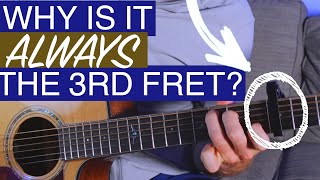
The capo acts like a movable nut. When you slide it to any fret, the strings are shortened, raising each open string by the number of semitones that the fret represents. For example, placing a capo on the 3rd fret raises every string by three half‑steps, turning a G major chord into a Bb major shape if you use the same fingering.
Why Guitarists Use a Capo
- Transposing Songs Quickly – Instead of learning new chord charts for each key, you can simply move the capo and keep familiar shapes.
- Creating a Fresh Sound – The higher pitch can give a song a lighter, brighter character.
- Accommodating Vocal Range – Songs written in a difficult key can be shifted to suit a singer’s voice.
- Experimenting with Timbre – Different capo positions can change the resonance and feel of a chord progression.
Types of Capos and How to Choose One
- Spring‑Loaded Capos – These clamp automatically with a spring and are great for quick changes.
- Screw‑On Capos – Offer precise pressure control but may take longer to adjust.
- Screw‑Less or Clamp Capos – Often used on acoustic guitars; they’re lightweight and easy to install.
When selecting a capo, consider the guitar’s neck width, your playing style, and how often you’ll need to change positions. A durable, well‑balanced capo will provide consistent tension without damaging the strings.
Using a Capo in Practice
To get the most out of a capo, follow these steps:
- Place the capo on the desired fret, ensuring all strings are firmly pressed.
- Check that the strings are not buzzing or muted.
- Adjust the capo’s position slightly if you hear any dissonance.
- Practice chord shapes and scales to get comfortable with the new tuning feel.
Transposing Songs with a Capo
Transposing is one of the capo’s biggest advantages. Instead of learning new chord charts, you can simply: