What Is Basofilos in English?
“Basofilos” is the Spanish term for the white blood cell known in English as a basophil. Basophils belong to the granulocyte family of leukocytes and play a key role in the innate immune system, especially in allergic responses and parasitic infections. Understanding basophils helps clarify how the body detects and reacts to foreign substances and how certain blood disorders may arise when their numbers become abnormal.
Basophils: An Overview
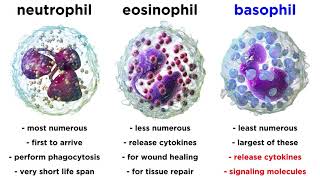
Basophils are the smallest subset of circulating granulocytes, making up less than 1 % of the total white blood cell count in healthy adults. They are identified by:
- Basophilic granules that stain deep blue or purple with basic dyes.
- A spindle‑shaped nucleus that is often folded.
- Release of histamine and other mediators when activated.
These cells circulate in the bloodstream and can migrate to tissues during inflammation or allergic reactions.
Functions of Basophils in Immunity
Allergic Responses
When an allergen triggers a hypersensitivity reaction, basophils become activated and release histamine, cytokines, and leukotrienes. This process:
- Increases vascular permeability.
- Attracts other immune cells to the site of inflammation.
- Contributes to symptoms such as itching, wheezing, and swelling.
Defense Against Parasites
Basophils also participate in the defense against helminths and other parasites by releasing inflammatory mediators that recruit eosinophils and macrophages, enhancing the body’s ability to expel these organisms.
Interaction with Mast Cells
Both basophils and mast cells share similar functions and can respond to IgE antibodies. While mast cells are tissue‑resident, basophils act as a circulating reserve, ready to be recruited to sites of infection or allergy.
When Basophil Numbers Change
Abnormal basophil counts may indicate underlying health conditions. The two main scenarios are:
- Basophilia – an elevated basophil count. Causes include chronic inflammation, myeloproliferative disorders, and certain infections.
- Basopenia – a reduced basophil count, often seen in acute allergic reactions or after medication that suppresses bone marrow activity.
Diagnosing the cause typically involves a complete blood count (CBC) with differential, followed by targeted testing if a disorder is suspected.
How Basophils Are Measured
Modern hematology analyzers automatically flag abnormal basophil percentages. However, because of their low frequency, a manual review of a peripheral blood smear may be necessary for accurate assessment. Key steps include:
- Staining the smear with Wright or Giemsa solutions.
- Identifying basophils by their dark purple granules.
- Counting at least 1000 leukocytes to determine the proportion accurately.